

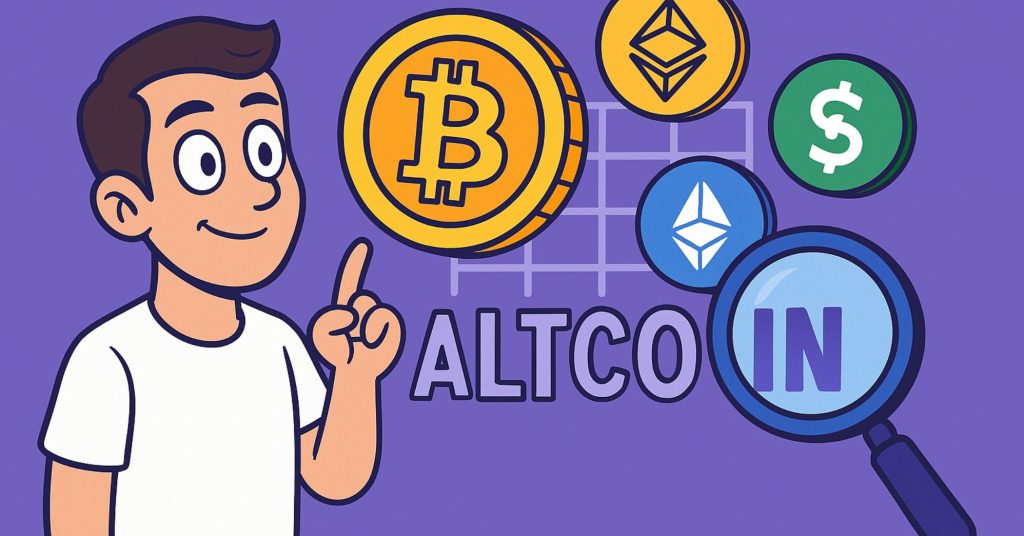
Bitcoin stands as the most prominent cryptocurrency, yet represents just one part of a vast digital world.
Altcoins – all cryptocurrencies except Bitcoin – have evolved significantly since their inception. Litecoin emerged in 2011 as a fork of the Bitcoin blockchain and paved the way for future innovations. Today’s most valuable altcoins include Ethereum, Tether, Binance Coin, Solana, and USD Coin that serve unique purposes in the crypto ecosystem.
You’ll find what altcoins are in this piece and explore their various types. Understanding how they differ from Bitcoin and why some achieve success while others fail will give you deeper insights into this crucial segment of the cryptocurrency world.
What Is an Altcoin? Understanding the Basics
The cryptocurrency universe reaches way beyond the reach and influence of Bitcoin. An altcoin represents any cryptocurrency that isn’t Bitcoin. Thousands of digital currencies make up this category, each bringing unique features and purposes to the table.
Simple Definition of Altcoins
Altcoins emerged as alternatives to Bitcoin, the first digital currency. Current estimates show between 9,000 and 20,000 altcoins exist today. These digital assets show remarkable diversity in their utility, value, and adoption rates.
Crypto enthusiasts sometimes define altcoins more specifically as any cryptocurrency except Bitcoin and Ethereum. This point of view recognizes Ethereum’s vital role in expanding blockchain capabilities beyond basic transactions.
Notwithstanding that, expert consensus defines “altcoin” as all cryptocurrencies other than Bitcoin. Major players like Ethereum, Litecoin, and Ripple fall into this category, among other smaller projects.
Why They’re Called ‘Alternative’ Coins
The word “altcoin” combines “alternative” and “coin”. This name reflects their nature as alternatives to Bitcoin and traditional fiat currencies.
These digital assets got their “alternative” label after Bitcoin’s emergence as the first cryptocurrency. Bitcoin’s creation sparked the cryptocurrency universe, becoming the starting point from which all other digital currencies grew.
Many altcoins were designed to solve Bitcoin’s perceived limitations. They offer different features and improvements, positioning themselves as alternatives rather than competing directly.
How Altcoins Differ from Bitcoin
Altcoins share Bitcoin’s blockchain foundation but introduce key differences:
Purpose and functionality: Bitcoin focuses solely on digital money, while many altcoins serve specific niches. Some work as utility tokens for blockchain services, others enable smart contracts, and several prioritize privacy or governance.
Technical features: Altcoins often modify Bitcoin’s original design. Litecoin, to name just one example, uses a different proof-of-work consensus mechanism called Scrypt that runs faster and uses less energy than Bitcoin’s SHA-256 system.
Innovation level: Altcoins appeared after Bitcoin and often use more advanced technologies. Ethereum introduced smart contracts—self-executing agreements with predefined conditions that enable applications beyond basic transactions.
Risk and reward profile: Most altcoins show higher potential returns but carry increased risk compared to Bitcoin. Their price volatility makes them potentially more profitable yet riskier for investors.
These differences help altcoins expand the cryptocurrency ecosystem’s capabilities beyond Bitcoin’s original scope.
The Evolution and History of Altcoins
The altcoin revolution started in 2011 as developers began to learn about alternatives to Bitcoin’s original design. This marked the start of cryptocurrency diversification that led to today’s complex digital world.
The First Altcoin: Namecoin (2011)
Namecoin became the first altcoin in April 2011. An anonymous creator known as Vincent Durham (or “Vinced”) developed it to provide a decentralized domain name system (DNS). Namecoin didn’t focus on currency like Bitcoin did. Instead, it wanted to decentralize domain name registration and create a censorship-resistant top-level domain “.bit”. The platform brought an innovative concept of merged mining that let miners work on both Namecoin and Bitcoin at once. A 2015 study revealed a stark reality – only 28 out of 120,000 registered Namecoin domains saw actual use.
Key Moments in Altcoin Development
Several most important altcoins emerged after Namecoin:
- Litecoin (October 2011): Developers created it as a “lite” version of Bitcoin with faster block times and a different hashing algorithm (Scrypt instead of SHA-256).
- Peercoin (August 2012): The platform introduced the innovative proof-of-stake (PoS) consensus mechanism that addressed environmental concerns.
- Ripple (2012): The project optimized cross-border payments with a unique consensus protocol.
- Ethereum (July 2015): This platform changed blockchain technology by introducing smart contracts that enabled decentralized applications.
The ICO boom of 2017 sparked an explosion of new altcoins. Developers launched over 600 cryptocurrencies that year alone. Platforms like EOS and NEO emerged during this time. They wanted to solve Ethereum’s scalability problems.
How the Altcoin Market Has Grown
The altcoin market has grown remarkably since 2011. A market-cap-weighted index of the 100 largest altcoins beat Bitcoin by more than 75 percentage points annually between January 2017 and January 2022. Bitcoin’s market dominance fell from nearly 90% in December 2016 to less than 43% by January 2022.
This diversity created “Altcoin Season” – periods when all but one of these top 100 coins perform better than Bitcoin over 90 days. The altcoin market now holds a combined value of over $190 billion. These numbers show impressive growth from its early days.
Different Types of Altcoins and Their Uses
Altcoins exist in many forms, each playing a unique role in the cryptocurrency ecosystem. Let’s look at the main categories and what makes them special.
Payment Tokens: Digital Money Alternatives
Payment tokens work as currencies that help people exchange value. These digital assets function just like regular money but run on blockchain technology. Bitcoin stands out as the best example of a payment token, and many other altcoins fit this category too. The security of payment tokens improves through tokenization – a process that swaps sensitive payment data with safe tokens to cut down fraud risks.
Utility Tokens: Powering Blockchain Services
Utility tokens let users access specific products or services in a blockchain ecosystem. Think of them as digital keys that unlock features on particular platforms. These tokens aren’t meant to be investments – they’re tools to use services. To cite an instance, Basic Attention Token (BAT) helps advertisers pay for services on the Brave browser, and users earn BAT rewards when they watch ads. These tokens also act as transaction tools within specific ecosystems to encourage user participation.
Stablecoins: Price-Stable Cryptocurrencies
Stablecoins reduce market swings by linking their value to external assets like regular currencies, precious metals, or other cryptocurrencies. You’ll find three main types: fiat-collateralized, crypto-collateralized, and algorithmic. Tether (USDT), USD Coin (USDC), and MakerDAO’s DAI lead this category. The stablecoin market has seen explosive growth – this is a big deal as it means that total transfer volume hit $27.60 trillion in 2024, which exceeded the combined volume of Visa and Mastercard transactions.
Governance Tokens: Voting Rights on Blockchains
Governance tokens give their holders a voice in shaping a blockchain project’s future. Each token typically counts as one vote, so people can help decide on protocol changes, treasury spending, and platform upgrades. These tokens form the backbone of Decentralized Autonomous Organizations (DAOs) and make sure no single authority calls all the shots. Users can also stake, lend, borrow, and farm yields with these tokens.
Meme Coins: Community-Driven Cryptocurrencies
Meme coins spring from internet culture and trends, building communities rather than pushing technical innovation. Unlike their utility-focused cousins, meme coins work mainly as tradable currencies without specific use cases. Dogecoin, Shiba Inu, and Pepe lead the pack, making up over 67% of all meme coin value as of February 2025. The meme coin scene has exploded – one platform alone launched 5.3 million meme coins from January 2024 to January 2025.
Popular Altcoin Examples and What Makes Them Special
The crypto world has thousands of cryptocurrencies. Four altcoins stand out from the rest because of their features and real-life utility. These coins have reshaped the scene of cryptocurrency dramatically.
Ethereum (ETH): The Programmable Blockchain
Vitalik Buterin launched Ethereum in 2015 and changed the crypto world by creating smart contracts. These self-executing programs automate transactions between parties without middlemen. Ethereum became the first programmable blockchain. It now supports thousands of decentralized applications and cryptocurrencies. The network’s native currency, Ether (ETH), runs the entire ecosystem and ranks second in market capitalization. Ethereum works as a Layer 1 or base network. Developers worldwide can build innovative applications on it.
Litecoin (LTC): The Silver to Bitcoin’s Gold
Charlie Lee, a former Google engineer, created Litecoin in 2011 as one of the first altcoins. People call it “the silver to Bitcoin’s gold.” Litecoin processes transactions faster with blocks verified every 2.5 minutes—four times faster than Bitcoin’s 10-minute blocks. The network uses the Scrypt hashing algorithm, which needs fewer resources than Bitcoin’s SHA-256 system. Litecoin’s maximum supply is 84 million coins, compared to Bitcoin’s 21 million. Lee designed it to be a faster, lighter version of Bitcoin.
Dogecoin (DOGE): From Joke to Valuable Asset
Software engineers Billy Markus and Jackson Palmer created Dogecoin in 2013 as a joke about crypto speculation. The coin features the famous Shiba Inu dog logo. DOGE started as a simple Reddit tipping tool before catching everyone’s attention. Tech billionaire Elon Musk’s support pushed Dogecoin’s price from $0.01 to $0.65 in 2021. This 6,400% increase happened in just five months. Dogecoin’s market cap reached $58 billion by November 2024.
Binance Coin (BNB): The Exchange Token Success Story
BNB started in 2017 as an ERC-20 token on Ethereum. The coin has grown into Binance ecosystem’s native cryptocurrency. The network moved to its own blockchain in 2019. BNB gives users lower trading fees on Binance, the world’s biggest crypto exchange. The coin has a unique supply reduction system. Regular “burns” decrease the total supply from 200 million to eventually 100 million tokens. BNB lets users join token sales and stake their coins. The network also powers many decentralized applications.
Conclusion
Altcoins have evolved remarkably since Namecoin’s initial experiment. Today’s cryptocurrency landscape features thousands of digital currencies. Litecoin speeds up payments, Ethereum enables smart contracts, and Dogecoin builds thriving communities.
Cryptocurrency investors now have many choices beyond Bitcoin. Payment tokens give people new ways to move value around. Utility tokens make blockchain services work better. Price stability comes from stablecoins, while governance tokens let communities make decisions together. Meme coins bring people together through shared interests.
Ethereum, Litecoin, Dogecoin, and Binance Coin show how altcoins succeed by solving specific problems. These cryptocurrencies have proven their value through real-life uses, dedicated communities, and technical breakthroughs.
Digital currencies keep reshaping our financial future, making altcoins more relevant each day. Bitcoin still leads the market, but altcoins have become vital parts of the cryptocurrency ecosystem. They provide solutions to real-life challenges effectively.
