


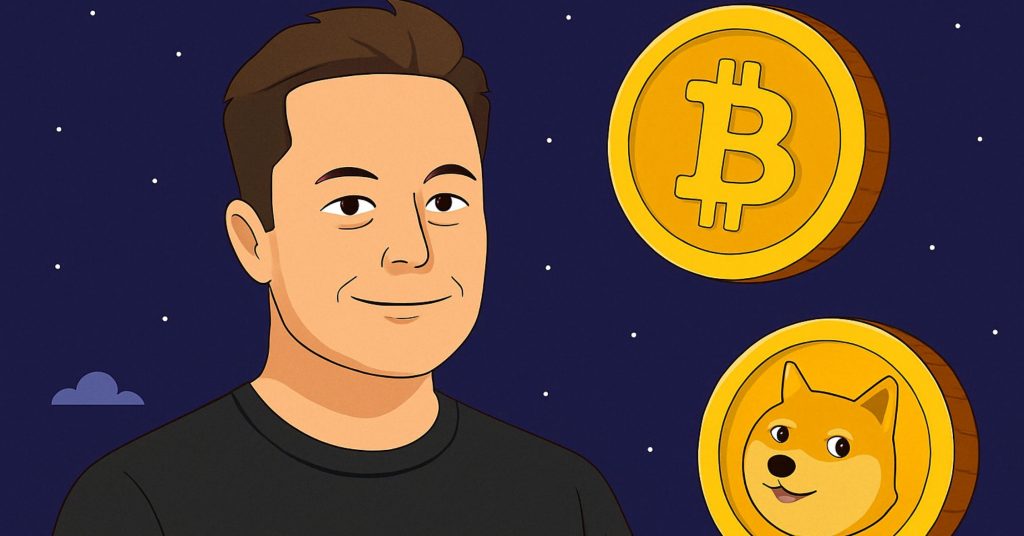
Anyone who invested $1,000 then would have $67,400 today. This demonstrates his powerful influence on cryptocurrency markets.
Musk openly declared his cryptocurrency portfolio in 2021. He owns Bitcoin, Ethereum, and Dogecoin. His company Tesla holds almost 10,000 Bitcoins, making it one of the largest corporate Bitcoin holders. While many speculated about his other investments, Musk clarified he doesn’t own cryptocurrencies like Shiba Inu.
The tech mogul’s involvement with cryptocurrency goes beyond personal investments. His social media activity moves market prices substantially. A simple change to his bio caused Bitcoin’s price to jump 20%. This piece details Musk’s complete cryptocurrency holdings and their effect on the market.
Elon Musk’s First Steps into Crypto
Elon Musk’s crypto trip started quietly before making global headlines. His original interest in digital currencies grew into meaningful investments that would shake up entire markets.
How Musk first mentioned Bitcoin and Dogecoin
Musk’s crypto adventures kicked off in 2014 with his first Bitcoin mention during a BI Intelligence interview. He simply called Bitcoin “probably a good thing” but didn’t own any. His careful, analytical approach showed he recognized crypto’s potential early.
The billionaire’s Dogecoin story had a more playful start. Twitter users voted him “CEO of Dogecoin” in 2019. He played along by updating his bio to “CEO of Dogecoin” and tweeted “Dogecoin might be my fav cryptocurrency. It’s pretty cool.” This casual remark sparked his influential connection with the meme coin.
Early tweets and public statements
Musk’s social media posts became more crypto-focused from 2019 to 2021. He loved sharing memes and jokes about Dogecoin. His December 2020 tweet “One word: Doge” sparked a 20% price jump instantly.
His crypto commentary picked up steam in early 2021:
- January 2021: His Twitter bio update to #bitcoin pushed prices up 14%
- February 2021: A tweet showing “Doge” with a meme of himself as Rafiki from The Lion King holding up a Dogecoin “Simba”
These weren’t just fun posts – they moved markets. His tweets about cryptocurrencies reliably caused major price swings, showing his growing power in the space.
Initial personal investments in BTC, ETH, and DOGE
Musk finally confirmed his crypto holdings in 2021 after initial hesitation. At a B Word conference, he revealed owning Bitcoin, Ethereum, and Dogecoin without specific amounts. His Bitcoin investment was “worth a lot more than Ethereum or Doge.”
He kept his strategy simple during this time. All but one of these three cryptocurrencies stayed out of his portfolio. He directly denied rumors about investments in coins like Shiba Inu.
Musk showed genuine excitement about cryptocurrency personally. Yet he managed to keep his personal investments separate from his companies’ treasury decisions – a line that would soon blur as his crypto involvement grew deeper.
How Musk’s Crypto Portfolio Evolved Over Time
Elon Musk’s cryptocurrency portfolio went through dramatic changes between 2020-2025. His stance on different coins shows both personal preference and strategic business decisions.
Tesla’s $1.5B Bitcoin purchase and later sale
Tesla made headlines in February 2021 with a massive $1.5 billion Bitcoin purchase. The corporate investment validated Bitcoin as a treasury asset for major companies. Tesla started accepting Bitcoin payments for vehicles right after, which pushed prices higher.
The environmental impact of Bitcoin mining soon caught Musk’s attention. Tesla stopped accepting Bitcoin payments in May 2021. The market corrected significantly after this announcement.
Tesla sold 75% of its Bitcoin holdings in Q2 2022. The company converted Bitcoin worth $936 million to regular currency. Musk said they needed to maximize cash reserves due to uncertain COVID lockdowns in China.
Public confirmation of Ethereum ownership
Musk confirmed he owned Ethereum along with Bitcoin and Dogecoin at the 2021 “B Word” conference. “I do own some Ethereum,” he said and added it was “worth a lot less than my Bitcoin.”
Musk stays quieter about his Ethereum investments compared to his vocal Dogecoin support. He mostly talks about Ethereum’s technical aspects rather than price predictions.
DOGE becoming a personal favorite
Dogecoin emerged as Musk’s clear favorite among his crypto holdings. His love for the memecoin grew stronger throughout 2021-2022. He frequently posted Doge memes and references on social media.
The Dogecoin community and its humor-based roots in part drive Musk’s attachment. “Fundamentally, Bitcoin is not a good substitute for transactional currency,” Musk said in 2021. He suggested Dogecoin might work better for payments.
His support went beyond social media posts. Tesla began accepting Dogecoin for merchandise in January 2022. Musk suggested several improvements to Dogecoin’s network that indicates his long-term interest goes beyond its meme status.
Musk never announced selling any personal Dogecoin holdings, unlike Bitcoin. This suggests his stronger belief in Dogecoin’s long-term potential as part of his crypto portfolio.
Crypto in Musk’s Companies: Tesla, SpaceX, and More
Elon Musk has taken cryptocurrency beyond personal investments by merging it into his business empire. His theoretical support has transformed into practical applications throughout his companies.
Tesla accepting DOGE for merchandise
Tesla started accepting Dogecoin as payment for select merchandise in its online store in January 2022. This decision followed Tesla’s short experiment with Bitcoin payments for vehicles, which stopped in May 2021 because of environmental concerns.
The Dogecoin integration continues to run smoothly, unlike the Bitcoin test. Customers can buy items like the “Giga Texas Belt Buckle” ($150) and the quirky “Cyberwhistle” ($50) exclusively with DOGE. Musk’s preference for cryptocurrency transactions becomes clear through this implementation.
Tesla’s terms make it clear that all Dogecoin purchases are final without returns or cancelations. Customers must have their own Dogecoin wallets because payments need to go through in a single transaction within a specific timeframe.
DOGE-1 mission by SpaceX
SpaceX grabbed headlines in May 2021 by accepting Dogecoin as full payment for a lunar mission called “DOGE-1.” Through collaboration with Geometric Energy Corporation, they plan to launch a 40kg CubeSat as a rideshare on a Falcon 9 rocket.
Tom Ochinero, SpaceX’s Vice President of Commercial Sales, called it the first crypto payment in space and “the foundation for interplanetary commerce.” The mission faces delays but remains on track despite its original early 2022 launch schedule.
The Boring Company’s DOGE payments
The Boring Company joined Tesla’s crypto journey in July 2022 by accepting Dogecoin for rides on its Las Vegas Loop transportation system. Each ride costs $1.50, making DOGE a practical transportation currency.
The company expanded its crypto acceptance to merchandise, including its popular “Not-A-Flamethrower” product. Musk’s genuine belief in Dogecoin’s potential as a payment method shows through this consistent implementation across his companies.
These business integrations show that Musk’s cryptocurrency involvement goes beyond personal investment to strategic business implementation, especially with Dogecoin.
Musk’s Changing Views on Crypto Technology
Elon Musk’s cryptocurrency portfolio stays steady with Bitcoin, Ethereum, and Dogecoin, but his technical views on these technologies have changed a lot over time.
Criticism of Bitcoin’s energy use
Musk’s biggest change of heart came in May 2021. He announced Tesla would stop taking Bitcoin payments because he worried about “rapidly increasing use of fossil fuels for Bitcoin mining.” Tesla had bought $1.5 billion in Bitcoin just three months earlier, which shows how fast his views changed.
His environmental worries went deep—Musk pointed out problems with Bitcoin’s mining system. “Energy usage trend over past few months is insane,” he said. He then suggested Bitcoin mining should use at least 50% renewable energy before Tesla would take it as payment again.
Musk still keeps his personal Bitcoin investments, though he’s more careful about its effect on the environment.
Concerns about Ethereum’s speed and fees
Ethereum stays in Musk’s crypto wallet, but he doesn’t love how the network performs. He worries most about slow transaction speeds and high gas fees when the network gets busy.
Musk pointed out in late 2021 that Bitcoin and Ethereum both had “low transaction volume and high costs.” This made him doubt they could work for everyday payments. His technical take explains why he talks less about Ethereum compared to his strong support for Dogecoin.
Skepticism toward NFTs and memecoins
Musk owns Dogecoin, the first memecoin, but he doesn’t trust the wider NFT and memecoin market. He posted in December 2021: “I don’t know… seems kinda fungible” next to an NFT meme. This showed he was making fun of the non-fungible token idea.
Musk’s crypto views show he thinks practically about technology rather than blindly supporting his investments. He cares about:
- Making transactions useful instead of just speculating
- Using energy wisely instead of defending proof-of-work at any cost
- Real breakthroughs instead of hyped-up markets
This practical approach explains why Musk keeps holding Bitcoin, Ethereum, and Dogecoin but stays careful about newer crypto trends and technologies.
Conclusion
Elon Musk’s cryptocurrency holdings reveal his most important influence on digital currency markets. He owns only Bitcoin, Ethereum, and Dogecoin, but his effect reaches way beyond his personal investments.
Musk’s companies showcase cryptocurrency’s ground applications. Tesla handles Bitcoin transactions and accepts Dogecoin for merchandise. His other ventures, SpaceX and The Boring Company, expand Dogecoin’s use through space missions and transportation payments.
Musk’s stance on cryptocurrency mixes both support and skepticism. His worries about Bitcoin mining’s environmental cost and high transaction fees show he values practical use over speculation.
Musk stands as one of cryptocurrency’s key influencers through his market-moving tweets and billion-dollar corporate decisions. His words and actions shape how people view and adopt digital currencies, particularly his favorite – Dogecoin.
